Bid Response

A bid response is a formal document submitted by a company or individual in reply to a request for proposals (RFP) or tender. It outlines the bidder’s approach, pricing, qualifications, and terms to meet the requirements specified by the client or buyer, aiming to secure the contract or project.

What is Bid Response?

A bid response is a structured, formal submission to an RFP or tender, articulating the bidder’s solution, pricing, qualifications, and commercial terms to align with the client’s stated requirements. In B2B procurement, it demonstrates comprehension of scope, mitigates risk through clear methodologies, and evidences capacity with credentials and case studies. Decision-makers expect concise compliance matrices, transparent cost breakdowns, and value-added differentiators such as timelines, service levels, and measurable outcomes. Effective responses translate needs into a tailored delivery plan, with governance, KPIs, and assumptions declared. Precision, consistency, and clarity increase shortlist likelihood, speed evaluation, and position supplier to secure the contract.
currency

Example

As a marketer responding to an RFP for social media management, you would submit a bid response that includes:
– An introduction of your marketing agency and expertise
– Your understanding of the client’s goals and target audience
– A detailed plan outlining your social media strategy, content creation, and posting schedule
– Pricing for your services, including any packages or hourly rates
– Examples of previous successful campaigns or client testimonials
– Terms and conditions, such as contract length and reporting methods
This bid response would be sent to the client to show how you intend to meet their needs and why they should choose your agency.
plus
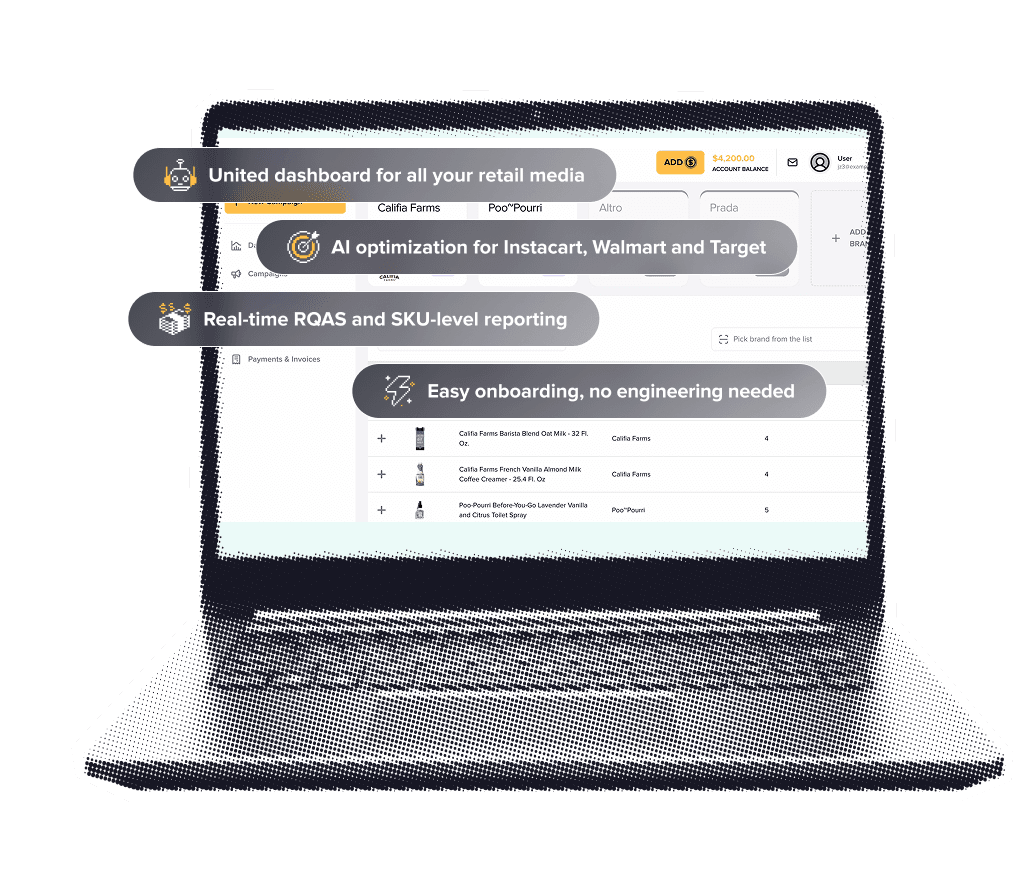
RMIQ streamlines bid response across retail media by unifying planning, execution, and performance tracking in a single platform, eliminating fragmented workflows and consolidating data from Walmart, Instacart, Amazon, Sprouts, Thrive Market, Target, Uber, and more than twenty additional networks that collectively reach up to 85% of the U.S. retail audience. Its multi-agent AI architecture replaces brittle, rule-based automation with autonomous specialists for bid adjustment, budget allocation, cross-network learning, A/B testing orchestration, and ongoing strategy refinement, enabling real-time bidding decisions at the SKU and keyword level that adapt continuously to market signals and inventory dynamics. These agents coordinate to maximize return on ad spend, with clients seeing average ROAS lifts above 50% and as much as five dollars in new sales for every dollar invested, while reducing manual oversight and cycle time on bid responses.

RMIQ’s cross-network intelligence transfers learnings from one marketplace to another, accelerating optimization for new assortments and promotions, and its unified interface centralizes dashboards, reporting, and approvals so revenue teams can respond to retailer requests faster and with greater consistency. Granular controls support enterprise governance at scale—across thousands of SKUs, brands, and budgets—without sacrificing agility for smaller portfolios, while automated guardrails protect margins and pacing against overspend or under-delivery. Built-in A/B testing frameworks validate bid and keyword hypotheses rapidly, and SKU-level insights surface which products warrant aggressive bids versus conservation, improving win rates for high-value placements.

Onboarding is fast—reported setup times as short as five minutes—backed by responsive customer support and playbooks tailored to your operating model. The result is a next-generation bid response capability that pairs precision targeting with adaptive automation, allowing your team to focus on strategy and partnerships while RMIQ executes, measures, and refines performance in real time. It integrates forecasting, scenario planning, and standardized workflows to align stakeholders and accelerate enterprise decisions confidently.


Skills and tools for Bid Response

Skills needed include proposal writing, project management, budgeting, and communication. Tools often used are word processors, spreadsheet software, project management apps, and sometimes specialized bid management software.

Our Current Partners

We are already helping leading retailers and platforms grow their retail media businesses, including:

Partners 2
Partners 1
Partners 4
Partners 6
Partners 5
Partners 4
Partners 3
Partners 2
Partners 1
Partners 3

Drop your email 

and we’ll show you how to double your retail media ROAS – no strings attached

mega
laptop
laptop
star green