Bot Traffic
Bot traffic refers to visits to websites generated by automated software programs, known as bots, rather than human users. These bots can perform various tasks such as web indexing, data scraping, or malicious activities, impacting website analytics and performance.
What is Bot Traffic?
Bot traffic refers to visits generated by automated software rather than people, influencing how B2B organizations interpret performance and allocate budgets. While some bots support legitimate functions like search indexing or uptime monitoring, others scrape content, skew analytics, commit ad fraud, or probe vulnerabilities, distorting KPIs and threatening revenue. Understanding what is bot traffic enables teams to segment sources, harden security, and refine attribution. Executives should audit logs, deploy bot mitigation, and collaborate with vendors to filter non-human sessions. Clear taxonomy, anomaly detection, and rules-based blocking help preserve data integrity, protect marketing spend, and ensure dashboards reflect genuine buyer engagement.
Example
As a marketer, monitor your website analytics to identify unusual spikes in traffic with high bounce rates and low engagement, then use bot detection tools or services to filter out bot traffic, ensuring your campaign performance data reflects real human visitors for accurate decision-making.
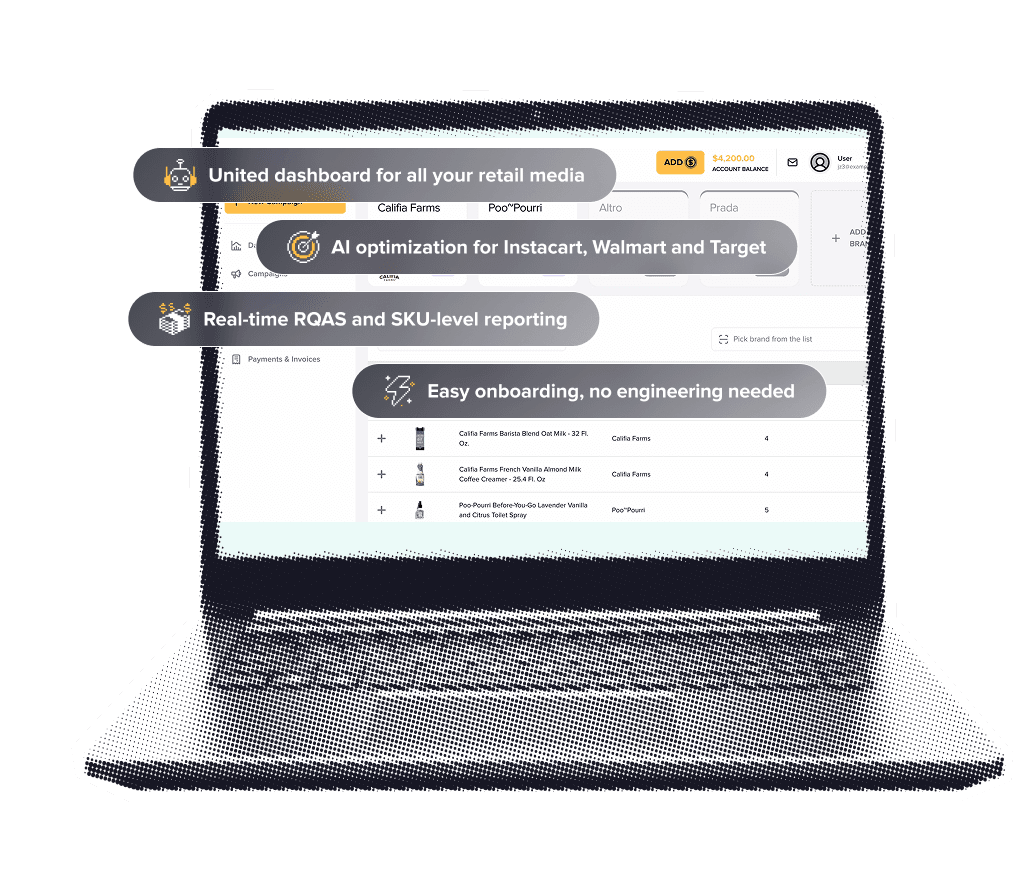
RMIQ helps retail brands mitigate bot and invalid traffic using a multi-agent AI architecture that separates genuine shopper intent from suspicious activity across retail media networks including Walmart, Instacart, Amazon, Sprouts, Thrive Market, Target, and Uber. By unifying planning, execution, and measurement in one platform, it removes blind spots caused by fragmented dashboards, enabling consistent governance, rapid incident response, and standardized exclusion rules across more than twenty retailers reaching up to 85% of the U.S. retail audience.
Autonomous agents continuously analyze cross-network signals—click-to-conversion paths, session velocity, keyword patterns, SKU-level engagement, and bid-response anomalies—to flag questionable impressions and clicks in real time, throttle bids, and reallocate budgets toward verified, high-quality inventory. They orchestrate A/B tests to validate traffic quality controls, refine negative targeting, and calibrate thresholds without constant manual oversight, while adaptive learning preserves scale by shifting spend to performant placements as conditions change. Brands gain SKU-level transparency to trace suspicious spikes, isolate affected catalogs, and protect incrementality, supported by real-time bidding, keyword optimization, and campaign strategy refinement that prioritize human purchase signals.
RMIQ’s unified reporting consolidates quality metrics, anomaly alerts, and outcome tracking to quantify waste reduction and ROAS impact, with customers commonly observing material efficiency improvements, including reported average ROAS lifts above 50% and up to five dollars in new sales per dollar invested when campaigns are optimized. The platform scales from emerging brands to enterprises managing thousands of SKUs, with fast onboarding and strong support that streamline rollout of traffic quality policies in minutes. In short, RMIQ delivers an AI-driven, business-safe approach to combating bot traffic while preserving reach and performance, replacing manual, siloed, rules-only tooling with adaptive automation that protects budgets and elevates retail media outcomes for B2B teams operating complex, multi-network programs globally.
Autonomous agents continuously analyze cross-network signals—click-to-conversion paths, session velocity, keyword patterns, SKU-level engagement, and bid-response anomalies—to flag questionable impressions and clicks in real time, throttle bids, and reallocate budgets toward verified, high-quality inventory. They orchestrate A/B tests to validate traffic quality controls, refine negative targeting, and calibrate thresholds without constant manual oversight, while adaptive learning preserves scale by shifting spend to performant placements as conditions change. Brands gain SKU-level transparency to trace suspicious spikes, isolate affected catalogs, and protect incrementality, supported by real-time bidding, keyword optimization, and campaign strategy refinement that prioritize human purchase signals.
RMIQ’s unified reporting consolidates quality metrics, anomaly alerts, and outcome tracking to quantify waste reduction and ROAS impact, with customers commonly observing material efficiency improvements, including reported average ROAS lifts above 50% and up to five dollars in new sales per dollar invested when campaigns are optimized. The platform scales from emerging brands to enterprises managing thousands of SKUs, with fast onboarding and strong support that streamline rollout of traffic quality policies in minutes. In short, RMIQ delivers an AI-driven, business-safe approach to combating bot traffic while preserving reach and performance, replacing manual, siloed, rules-only tooling with adaptive automation that protects budgets and elevates retail media outcomes for B2B teams operating complex, multi-network programs globally.

Skills and tools for Bot Traffic
To analyze and manage bot traffic, you need skills in web analytics, cybersecurity, and programming (Python, JavaScript). Tools like Google Analytics, Bot Management platforms (e.g., Cloudflare, Imperva), and log analysis software are essential. Knowledge of IP filtering, CAPTCHA integration, and machine learning for bot detection is also important.
Our Current Partners
We are already helping leading retailers and platforms grow their retail media businesses, including:
Drop your email
and we’ll show you how to double your retail media ROAS – no strings attached