Dynamic Pricing
Dynamic pricing is a strategy where businesses adjust the prices of products or services in real-time based on market demand, customer behavior, and other external factors. This approach helps maximize revenue, optimize inventory, and respond quickly to changing market conditions.
What is Dynamic Pricing?
Dynamic pricing enables enterprises to adjust prices in real time by interpreting demand signals, and market conditions, aligning value with willingness to pay. By deploying data-driven algorithms across channels, organizations can maximize revenue, protect margins, and balance inventory utilization while maintaining competitiveness. The approach mirrors surge patterns: higher prices during peak demand, lower during lulls, executed transparently to sustain trust. Integrations with CRM, ERP, and analytics platforms allow continuous optimization, segmentation, and rule governance. Executives gain agility to respond to competitors, seasonality, and supply constraints, while sales teams leverage guidance for quotes, promotions, and contracts, improving profitability and win rates.
Example
As a marketer for an online clothing store, you monitor customer demand and competitor prices daily. When a popular jacket starts selling quickly and competitors raise their prices, you increase your jacket’s price by 10% to maximize revenue. During off-peak times or low demand, you offer a 15% discount to attract more buyers and clear inventory. You use software to automatically adjust prices based on sales data, time of day, and competitor pricing, ensuring your prices remain competitive and profitable.
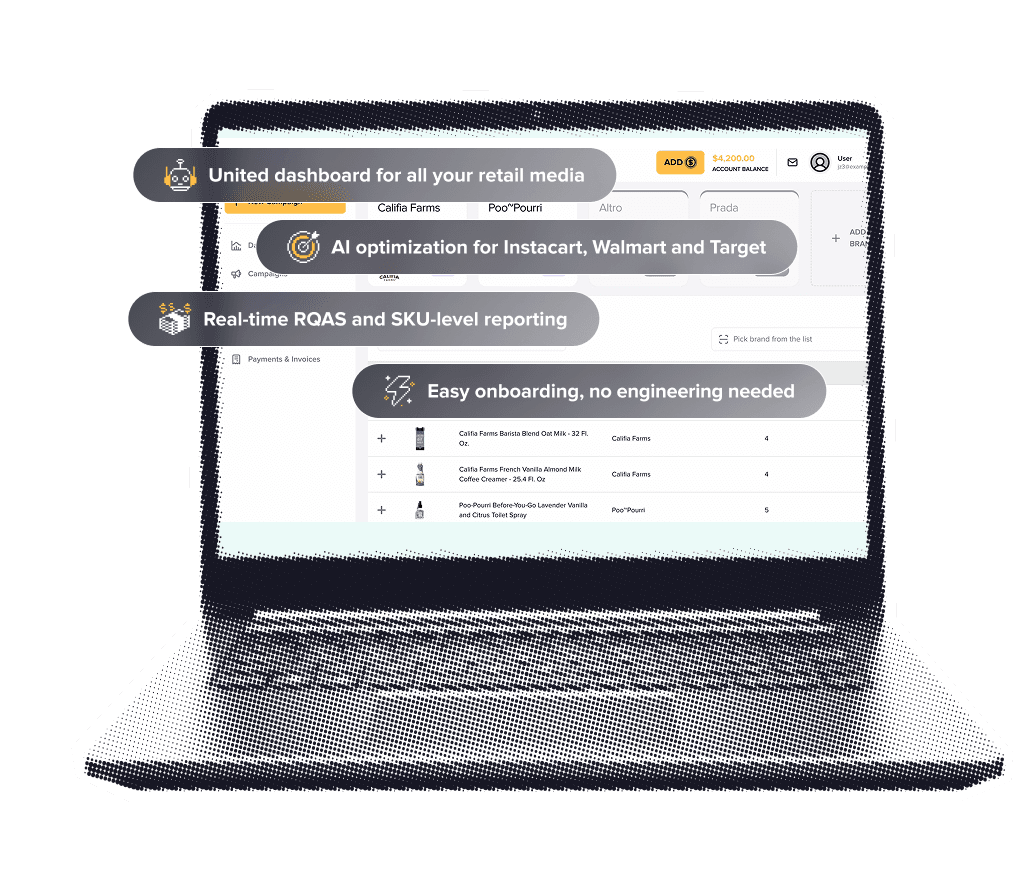
RMIQ empowers retailers and brands to operationalize dynamic pricing by unifying retail media intelligence, demand signals, and SKU-level performance into a single, AI-orchestrated workflow that informs price moves in real time. Its multi-agent architecture continuously learns across Walmart, Instacart, Amazon, Target, Sprouts, Thrive Market, Uber, and more than twenty additional networks, correlating impression share, click-through, basket composition, and conversion elasticity with inventory and competitive shifts to surface price opportunities at the product, keyword, and audience level. Autonomous agents coordinate bid adjustment, budget reallocation, and A/B testing while feeding responsive pricing recommendations that maximize margin and ROAS, enabling controlled experiments that link media pressure to willingness-to-pay and promotional lift.
With coverage reaching up to 85% of the U.S. retail audience, RMIQ delivers broad, real-time evidence to validate thresholds, prevent over-discounting, and time price changes to periods of peak likelihood to buy. The unified interface consolidates reporting, dashboards, and workflows so revenue, retail media, and merchandising teams can collaborate on guardrails, approvals, and automated rules without stitching together fragmented datasets or logging into multiple portals. Brands at any scale—from portfolios with thousands of SKUs to challenger labels—can set price floors, elasticity bands, and profitability targets, then let RMIQ’s agents tune bids, placements, and keyword strategies accordingly, driving up to five dollars in incremental sales for every dollar invested and average ROAS gains exceeding fifty percent.
Fast onboarding and expert support compress time to value to minutes, while governance features ensure auditability and compliance by channel. In practice, RMIQ transforms dynamic pricing from a periodic, manual exercise into a continuous, closed-loop system that senses demand, tests hypotheses, and adapts price and media in concert to protect margins and accelerate growth. Native APIs and connectors integrate with ERP, PIM, OMS, CDPs, and pricing engines, maintaining data fidelity and governance across regions and business units.
With coverage reaching up to 85% of the U.S. retail audience, RMIQ delivers broad, real-time evidence to validate thresholds, prevent over-discounting, and time price changes to periods of peak likelihood to buy. The unified interface consolidates reporting, dashboards, and workflows so revenue, retail media, and merchandising teams can collaborate on guardrails, approvals, and automated rules without stitching together fragmented datasets or logging into multiple portals. Brands at any scale—from portfolios with thousands of SKUs to challenger labels—can set price floors, elasticity bands, and profitability targets, then let RMIQ’s agents tune bids, placements, and keyword strategies accordingly, driving up to five dollars in incremental sales for every dollar invested and average ROAS gains exceeding fifty percent.
Fast onboarding and expert support compress time to value to minutes, while governance features ensure auditability and compliance by channel. In practice, RMIQ transforms dynamic pricing from a periodic, manual exercise into a continuous, closed-loop system that senses demand, tests hypotheses, and adapts price and media in concert to protect margins and accelerate growth. Native APIs and connectors integrate with ERP, PIM, OMS, CDPs, and pricing engines, maintaining data fidelity and governance across regions and business units.

Skills and tools for Dynamic Pricing
To implement dynamic pricing, you need skills in data analysis, machine learning, and programming (Python or R). Tools like pricing optimization software, AI algorithms, and real-time data tracking systems are essential. Understanding market trends and customer behavior through analytics platforms is also key.
Our Current Partners
We are already helping leading retailers and platforms grow their retail media businesses, including:
Drop your email
and we’ll show you how to double your retail media ROAS – no strings attached